
Modern organizations operate in an environment where compliance, professional competence, and trust are closely connected. Regulatory requirements continue to evolve, workplace responsibilities are becoming more complex, and organizations are increasingly expected to demonstrate that their employees have the knowledge and skills required to perform their roles effectively.
For corporate leaders, compliance is therefore more than maintaining policies or completing mandatory training. It also involves creating a workforce that can keep pace with professional and regulatory changes. This is where CPD compliance and structured professional development can play an important role. By establishing clear learning standards, recognizing quality training, and supporting credential verification, organizations can strengthen workforce capability while building greater confidence among employees, clients, regulators, and other stakeholders.
The New Standard for Corporate Compliance and Workforce Learning
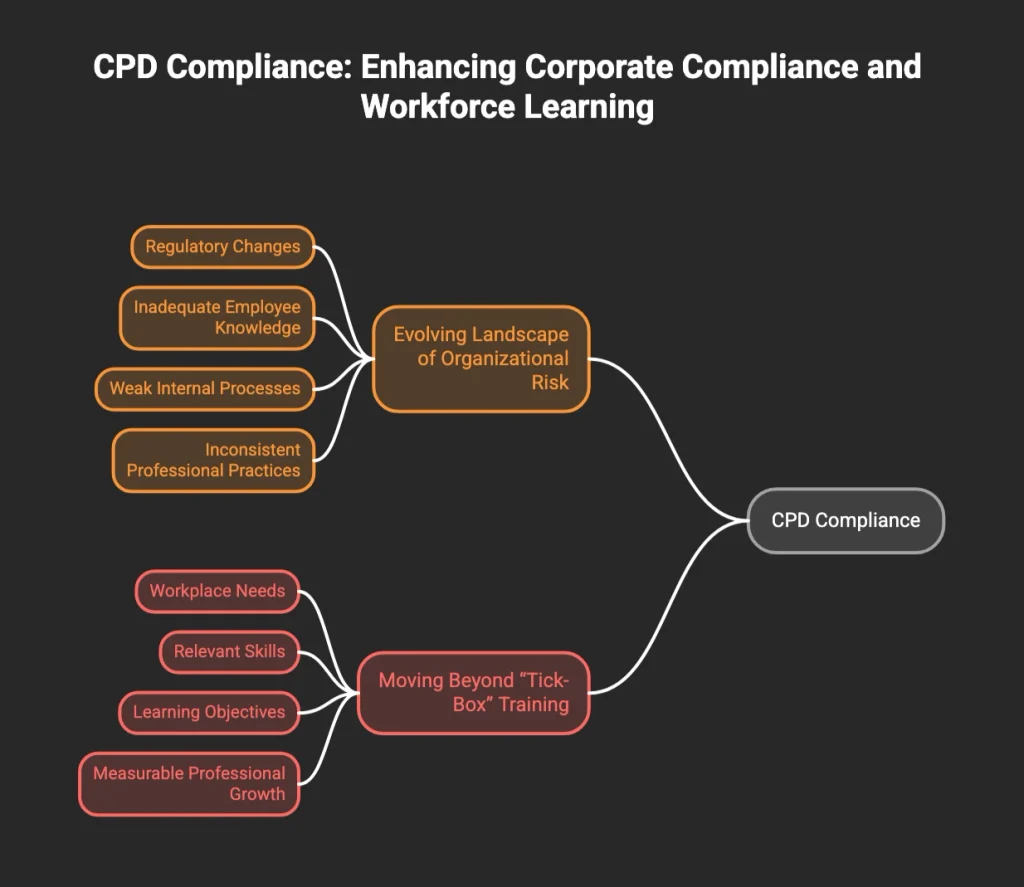
The Evolving Landscape of Organizational Risk
Organizational risk can arise from many areas, including regulatory changes, inadequate employee knowledge, weak internal processes, and inconsistent professional practices. In sectors such as legal services, finance, accounting, and human resources, even small gaps in knowledge can have wider consequences for an organization.
Regulatory training must therefore be treated as an ongoing process rather than a one-time activity. Employees need opportunities to update their knowledge as professional standards, regulations, technologies, and workplace expectations change.
A strong learning framework helps organizations approach this challenge systematically. Instead of relying solely on occasional training sessions, businesses can establish continuous professional development practices that encourage employees to maintain and improve their professional competencies.
This approach also supports organizational trust. When an organization can demonstrate that its workforce participates in structured and relevant learning, it provides stakeholders with greater confidence in the organization’s commitment to professional standards.
Moving Beyond “Tick-Box” Training
Completing a training session does not necessarily demonstrate meaningful professional development. A certificate or attendance record may show that someone participated in an activity, but organizations also need confidence in the quality and relevance of the learning itself.
This is where structured CPD can provide additional value. Professional development should be connected to workplace needs, relevant skills, learning objectives, and measurable professional growth.
Recognition and verification can add another layer of transparency. Rather than simply recording that training took place, organizations can use recognized learning frameworks to demonstrate that training has been reviewed against defined standards.
The goal is not to create additional administrative work. It is to move from a basic training-completion mindset toward a more credible and structured approach to workforce learning.
What Is CPD Compliance? Defining the Corporate Standard
Defining Enterprise CPD and Workforce Learning
CPD compliance refers to maintaining a structured approach to Continuing Professional Development that helps professionals and organizations continuously develop relevant knowledge, skills, and workplace competencies. In a corporate environment, it can include planning learning activities, maintaining appropriate records, recognizing quality professional development, and verifying relevant credentials.
CPD is particularly valuable because professional competency does not end when an employee completes an initial qualification. As industries evolve, employees need opportunities to update their knowledge and adapt their capabilities to changing workplace requirements.
For organizations, this creates a connection between workforce learning and broader business objectives. Training can be aligned with professional responsibilities, organizational priorities, and the skills employees need to perform effectively.
Structured and Verifiable Professional Development
A structured approach to professional development provides greater consistency than informal or entirely self-declared learning. Organizations can establish learning objectives, identify relevant development needs, document participation, and evaluate whether learning is applicable to the workplace.
Third-party recognition can further support this process by providing an external quality reference. Corporate accreditation or recognition can help organizations demonstrate that their learning structures and programs have been assessed against defined professional standards.
However, recognition should not be confused with government accreditation, professional licensing, or regulatory approval. CPD recognition supports professional learning, credibility, transparency, and workforce development; organizations remain responsible for meeting the specific legal and regulatory requirements that apply to their operations.
The CPD.us.org Architecture: Building Organizational Integrity
A major strength of CPD.us.org is that its recognition structure addresses different parts of professional learning rather than treating every training activity in exactly the same way.
CPD Provider Recognition
CPD Provider Recognition focuses on the organization delivering professional learning. This can be relevant to training centers, academies, corporate trainers, educational organizations, consultants, and other providers delivering structured professional development.
For corporate environments, this distinction matters because the quality of training depends not only on individual courses but also on the systems and capabilities of the organization providing them.
Provider recognition considers areas such as organizational infrastructure, curriculum design, assessment methodologies, structured delivery, and professional learning practices. This gives organizations an opportunity to demonstrate their commitment to maintaining appropriate standards in the delivery of workforce education.
For employers working with external training providers, recognized providers can also offer an additional reference point when evaluating professional development opportunities.
CPD Qualification Recognition
While Provider Recognition focuses on the organization, CPD Qualification Recognition focuses on individual programs.
Courses, workshops, certifications, diploma pathways, and workforce learning programs can be reviewed in relation to their structure, methodology, professional relevance, delivery, progression, assessment, and workforce applicability.
This distinction can be particularly useful for organizations with large internal learning programs. A company may have strong training infrastructure while also needing to demonstrate that individual learning programs are professionally relevant and appropriately structured.
Together, provider and qualification recognition create a more comprehensive approach to corporate learning quality.
Candidate and Provider Verification
Trust also depends on the ability to verify professional credentials.
CPD.us.org provides Candidate Verification and Provider Verification systems that support the authentication of recognized credentials and providers. Candidate verification can help confirm the authenticity of a qualification or certificate, while provider verification can provide information about an organization’s recognition status.
For HR departments and organizational leaders, verification can make credential checking more transparent. Rather than relying entirely on documents presented by candidates or employees, organizations can use verification systems to confirm relevant information.
This is especially valuable when professional development records are used as part of workforce documentation, career progression, or internal learning management.
Sector-Specific Applications: Legal, Finance, and HR
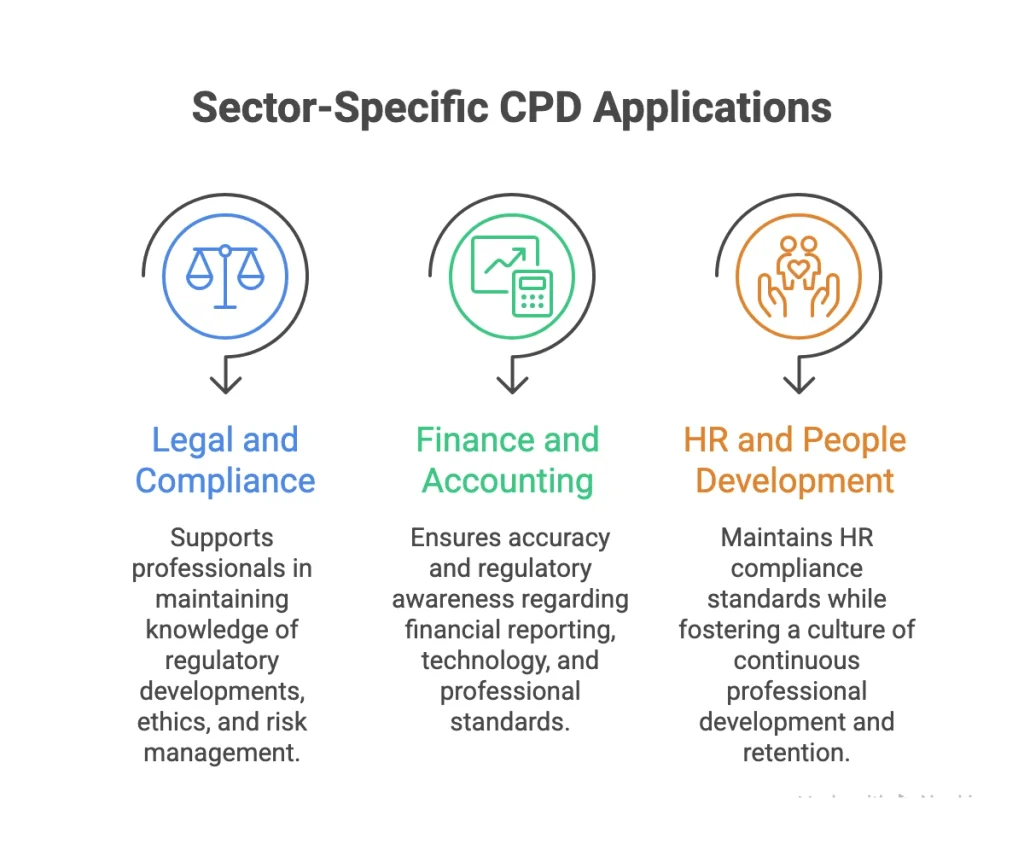
Legal and Compliance
Legal and compliance teams operate in environments where regulations, professional expectations, and organizational responsibilities can change regularly. Employees therefore need access to relevant learning that keeps their knowledge current.
Structured regulatory training can support this requirement by helping professionals develop and maintain knowledge relevant to their responsibilities. Topics may include regulatory developments, professional ethics, organizational policies, risk management, and changes affecting specific business activities.
For organizations, the value extends beyond individual development. A workforce that understands its responsibilities can contribute to stronger internal governance and more consistent compliance practices.
CPD should not be presented as a substitute for legal or regulatory obligations. Instead, it can serve as a structured framework for supporting the continuous learning needed alongside those obligations.
Finance and Accounting
Finance and accounting teams manage responsibilities where accuracy, professional judgment, ethics, and regulatory awareness are essential.
Continuous learning can help professionals respond to changes in financial regulations, reporting expectations, technology, risk management, and organizational procedures. Structured development also provides organizations with a clearer way to document learning activities and professional growth.
For financial organizations, credibility is particularly important. Clients, business partners, auditors, and other stakeholders need confidence that employees responsible for financial activities are maintaining appropriate professional knowledge.
A structured CPD framework can therefore support both individual competency and the organization’s broader commitment to professional standards.
HR and People Development
Human resources plays a central role in building and maintaining organizational capability. HR professionals are responsible for areas that can include workplace policies, employee development, organizational culture, professional training, and employment-related requirements.
Maintaining appropriate HR compliance standards requires continuous attention because workplace expectations and employment regulations can change. Regular professional development can help HR teams remain informed and better prepared to respond to new challenges.
CPD can also support employee development beyond compliance. When learning becomes part of an organization’s culture, employees have clearer opportunities to develop their skills, progress professionally, and contribute more effectively to organizational goals.
This creates a connection between compliance and retention: employees are not simply completing required training but participating in a broader culture of continuous professional development.
Reducing Organizational Risk and Building Corporate Trust
Supporting Governance and Audit Readiness
Organizations need reliable records when demonstrating that appropriate training and development activities have taken place. Structured CPD processes can support this by creating clearer documentation around professional learning and workforce development.
For compliance and HR leaders, well-maintained records can make it easier to understand who has completed relevant learning, what type of development has taken place, and how workforce learning aligns with organizational needs.
This does not mean that CPD recognition automatically guarantees regulatory compliance or eliminates organizational liability. Instead, it provides a framework that can support stronger governance, documentation, and workforce competency.
In this sense, CPD becomes part of a wider risk-management approach. Policies, procedures, regulatory controls, professional development, and verification can work together to create a more accountable organizational environment.
Strengthening Stakeholder Trust and Credibility
Corporate trust is increasingly influenced by how organizations demonstrate quality and accountability. Clients want reliable service. Employees want credible development opportunities. Partners want confidence in professional standards. Organizations themselves need evidence that their workforce learning processes are being managed responsibly.
Third-party CPD recognition can contribute to this credibility by providing an external reference for the quality of professional learning.
For organizations, this can be particularly valuable when communicating the quality of internal academies, workforce programs, or external training partnerships. Recognition and verification do not replace an organization’s own responsibility for quality, but they can provide additional transparency for stakeholders.
Ultimately, trust is built through consistent actions. A commitment to structured learning, professional competency, transparent verification, and continuous improvement can demonstrate that an organization takes workforce development seriously.
Elevating Corporate Governance with CPD.us.org
Compliance in the modern corporate environment cannot depend entirely on policies, occasional training, or completed attendance records. Organizations need a continuous approach to workforce learning that helps employees maintain relevant knowledge and professional capabilities.
CPD compliance provides a framework for connecting continuous professional development with organizational learning and governance. Through structured learning, professional recognition, and credential verification, organizations can create a more transparent and credible approach to workforce development.
For legal and compliance teams, this can support ongoing professional learning. For finance and accounting departments, it can encourage continued development of technical and ethical knowledge. For HR teams, it can strengthen HR compliance standards while supporting employee development and organizational capability.
CPD Qualification Framework supports this broader approach through CPD Provider Recognition, CPD Qualification Recognition, Candidate Verification, Provider Verification, and workforce learning solutions. These services provide organizations with mechanisms to demonstrate commitment to structured professional development while maintaining transparency around recognized providers and qualifications.
Corporate recognition should never be viewed as a replacement for applicable laws, regulations, licensing requirements, or an organization’s own quality responsibilities. Instead, it can form part of a wider strategy for building professional capability, organizational integrity, and stakeholder confidence.
For today’s organizations, continuous learning is no longer simply an employee benefit. It can be an important part of maintaining professional standards, supporting governance, and building lasting corporate trust.
Learn how CPD accreditation strengthens organizational compliance and trust.